

Your Data Stays Yours
Each restaurant’s information is kept apart from every other restaurant. Your orders, staff, customers, and money records belong only to you. No other restaurant can see them.
“One platform. Every channel. Total control of the day.”
From cashier billing to owner dashboards, we build restaurant technology that helps food businesses cut order mistakes, track sales accurately, and scale outlet by outlet.
NxtRestro is a restaurant technology company that designs and builds the software that a food business uses to run its day. Our focus is the restaurant itself, meaning the counter, the table, the kitchen, the storeroom, and the owner’s office, and we design one connected platform that serves all of them instead of handing a restaurant five unrelated apps. Whatever is entered in one place is available in the others, so a cashier’s tap, a cook’s ticket and an owner’s report all come from the same underlying record. In practical terms, our services cover the main areas of restaurant operations.

Angular, JavaScript, jQuery, HTML5, CSS3
Spring Boot, J2EE, JSP
Node.js, Java, PHP, Laravel, Python
MySQL, MongoDB, PostgreSQL
Flutter, React Native, Android, iOS
Stripe, PayPal, Razorpay, CC Avenue, Payu, Payment Gateways
Amadeus, Sabre, Travelport, Skyscanner, Hotelbeds
AWS, Azure, Docker, Kubernetes, CI/CD
Each restaurant’s information is kept apart from every other restaurant. Your orders, staff, customers, and money records belong only to you. No other restaurant can see them.
Many restaurants keep phone numbers to share offers with regular guests. This must be done with care. NxtRestro supports taking customer details with their permission and keeping them safe.
When a customer pays online, NxtRestro waits for a trusted confirmation from the payment partner before saying an order is paid. This stops false claims and mistakes. Your restaurant is protected, and the customer’s payment is handled in a safe and proper way.
NxtRestro works out the real price, tax, and total again on its own server before accepting the order. Nobody can change a number on their screen to pay less. If you changed a dish price a minute ago, the guest is charged the new price.
We never promise what partners haven’t approved. Connecting to food delivery marketplaces depends on their own approvals and rules, and no one can skip that. We say so plainly. Where a connection is ready, we help you handle orders in a simple manual way meanwhile.
Sales, cash, tax, and profit are never mixed up. Money that was collected, tax, and estimated profit are four different things. NxtRestro keeps them apart, so your dashboard doesn’t give a fake sense of success. You can see which dishes sell, how outlets compare, where discounts go, and what stock is running low, all without opening five different tools.
A tired cashier taps “send” twice because the screen was slow. Without protection, the kitchen cooks two meals and the bill doubles. We built the system to spot this. It understands that two taps may mean one order and keeps only one. It’s a small thing, but it saves food, money, and the customer’s patience.
The total of a bill and the money collected are not always the same. A guest may pay part now, part by UPI, or leave some for later. We store the two things in separate boxes. At night, the owner can match cash and online payments easily, without opening ten notebooks or doing sums until midnight.
Not everyone in a restaurant should do everything. The chef doesn’t need to view sales. A new waiter shouldn’t cancel a bill. So each role gets its own set of keys. It keeps screens simple, and it keeps the owner’s mind at ease, because serious actions like refunds need a person he trusts.
No restaurant can peek into another’s records. Your orders, staff, customers, and money records belong to you alone. On our platform, each restaurant’s information is kept apart from every other one, like separate locked rooms in one big building. We take this very seriously because owners trust us with the most private numbers of their business every single day.
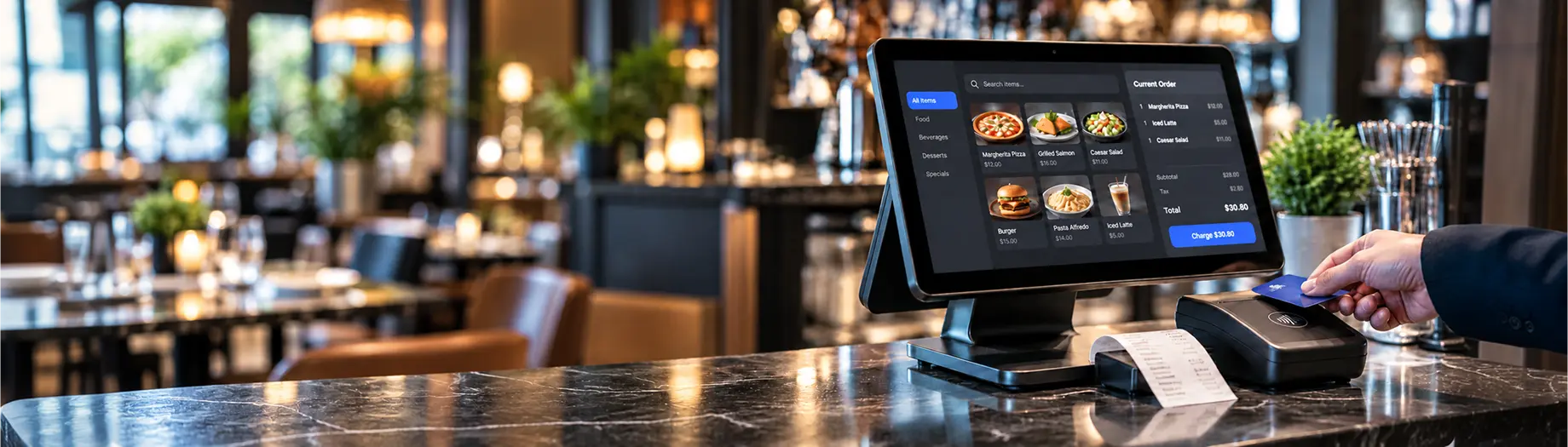
The platform is planned to include a POS for counter billing, a captain app for table service, a kitchen display for preparation, customer ordering through QR and web channels, an owner dashboard, inventory and purchasing, CRM and loyalty, a restaurant website, and an administration portal. These are planned as connected interfaces rather than unrelated products. NxtRestro makes sure that the restaurant work should remain connected from the first action to the final record.
This is designed to prevent repeated preparation and help kitchen staff understand exactly what has changed. Cancellations, modifications, and reprints are planned to remain part of the order’s audit history. The platform is also planned to support different restaurant types without forcing one fixed method of working.
The platform is planned to support order-ready notifications so staff can inform the customer when the food is packed. Scheduled pickup may also be supported for customers who wish to collect their order at a later time.
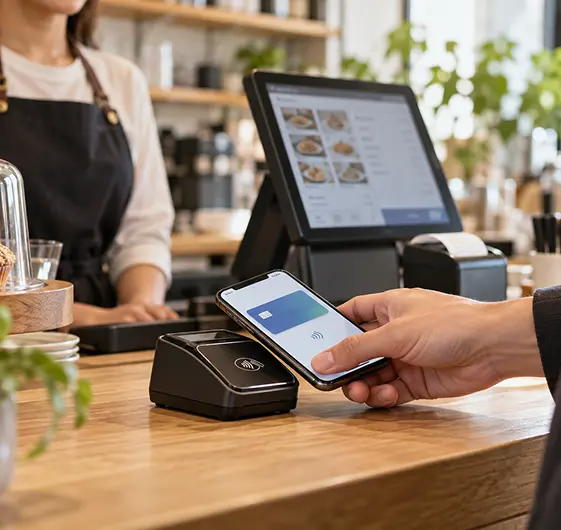
Payment is planned to remain flexible. The customer may pay at the counter through cash, UPI, or card. When the order is packed, the customer may then collect it using the token or order number. After handover, staff are planned to mark the order as collected. The platform is intended to update the bill, sales report, and stock consumption from the completed order. NxtRestro is planned to connect this customer action to the same order, kitchen, billing, and reporting system used inside the restaurant.
Key capabilities of a modern restaurant POS platforms include:
NxtRestro includes restaurant onboarding, outlet management, user accounts, subscriptions, device activation, support, integration monitoring, and much more. The order is planned to sit at the center of this system. After creation, the platform is intended to validate the outlet, menu item, price, tax, availability, and duplicate submission. The order can then move to payment or confirmation, depending on the restaurant’s rules and the order type. Once confirmed, the order is planned to reach the kitchen as a KOT. A kitchen ticket may be printed or displayed on a kitchen display screen.
Customers scan a code on the table and order from their own phone. They do not have to download any app.
This is for people who want packed food. Each order gets a token, so staff do not mix up the packets.
The waiter can take the order at the table without walking back to the counter. The order goes straight to the kitchen.
Every order follows the same path, whoever made it. This keeps things neat and easy to check.
Our inventory module is planned to connect menu sales with ingredient consumption. It is designed to help restaurants understand what stock is available, what has been used, what has been wasted, and what may need to be purchased.
Orders from outside delivery apps can come into the same place as every other order. Staff do not have to look at many screens
The restaurant should not stop when the internet stops. This is part of the main product and not an extra paid add-on.
This lets many devices keep working together even without internet. The restaurant’s own network does the sharing.
After the internet comes back, saved orders must reach the main system safely. Nothing should be lost or counted twice.
This is the restaurant’s public face on the internet. People can read about the restaurant and also order.
NxtRestro is planned so that each kind of business switches on what it needs and leaves the rest alone. Here is how it fits different types of restaurants.
A chain needs the same rules everywhere and a clear view of every branch. Owners can look at one outlet or the whole business together, compare how branches perform and set roles separately for each outlet. Stock can move between outlets, and sensitive actions like refunds stay behind permission.
Delivery-first brands receive orders from several places at once. We build a single order dashboard that brings your own website orders and supported marketplace orders into one kitchen flow, with availability sync and settlement records so nothing is lost between apps.
When one kitchen supplies many outlets, the work is bigger than a single counter. The enterprise level brings central kitchen management and chain management, along with marketplace integrations and advanced controls. It is made for businesses that have outgrown a single-outlet setup.
NxtRestro supports fast bills, token-based collection, and stock tracked item by item. Wastage and expiry are recorded, and the owner gets a simple day-end report.
|
Counter & Service Devices
|
Kitchen Equipment
|
|
Payment Methods
|
Internet & Network Support
|
Our engineering team works with a modern, proven technology stack selected for performance, security and scalability in high transaction travel booking environments. We do not force clients into a fixed stack. We recommend technologies based on your platform requirements as well as expected traffic and existing infrastructure.
|
Frontend & UI |
React.js, Angular, Vue.js, JavaScript (ES6+), HTML5, CSS3, Tailwind CSS |
|
Backend |
Node.js, Java (Spring Boot), PHP (Laravel), Python (Django/FastAPI) |
|
Mobile |
Flutter, React Native, Swift (iOS native), Kotlin (Android native) |
|
Databases |
MySQL, PostgreSQL, MongoDB, Redis (caching), Elasticsearch (search) |
|
APIs & Middleware |
RESTful APIs, GraphQL, SOAP/XML (GDS), OAuth 2.0, JWT |
|
Cloud & DevOps |
AWS, Azure, Docker, Kubernetes, GitHub Actions CI/CD, Terraform |
|
Payments |
Stripe, Razorpay, PayPal, CCAvenue, PayU, custom payment gateway SDK |
|
GDS & Travel APIs |
Amadeus, Sabre, Travelport, Hotelbeds, Skyscanner, TBO, RateHawk |
Many owners buy restaurant software with a few quiet beliefs in their heads. Some think “offline” means one simple thing, some think bars on a Wi-Fi icon mean the internet is working, and some think a bigger list of features always means a better product. These ideas sound harmless, but they cause real trouble on a busy evening. NxtRestro is planned with the truth about each of them in mind. Here are some common misunderstandings, each cleared up in plain words.
These are two papers with two readers. The bill is for the guest and carries prices, tax, and payment. The slip is for the cook and carries only what is to be prepared, with notes like “less spicy." NxtRestro prints both from local printers and keeps a record when a kitchen ticket is printed again.
Before an order is accepted, it should pass a quick check. Does the outlet exist, is the dish on the menu, is the price right, is the item available, are the taxes correct and is this a repeat submission? NxtRestro runs this kind of check for orders from every source. A mistake is caught at the door, which is much cheaper than finding it in the kitchen or the accounts.
People mix these up. One is the restaurant’s public website for the menu, location, and orders. Another is the management dashboard, where staff handle menus, stock, reports, and settings. The third is the software company’s own site for plans and support. NxtRestro keeps these jobs apart, which means a guest ordering food never lands on an owner’s controls.
Software is not the only thing that can stop. A kitchen printer can run out of paper, a device’s storage can fill up, or the cloud price list can change while an outlet is still offline. NxtRestro treats these as situations to test before launch. A battery backup for the router and the local server also helps keep service going through a power cut.
No two restaurants run the same way. NxtRestro builds restaurant technology tailored to the service style, order channels, and growth plans of each business we work with.
An owner cannot stand at every counter all day. The owner view brings sales, payments, stock, staff actions, and outlet results into one place, with low-stock alerts, discounts given, and voided bills in plain sight. Questions that used to need a phone call to the manager can be answered by looking at a screen.
NxtRestro follows a slow and sensible path, where each step prepares the ground for the next one. Here are the ten steps, in simple words.
|
Phase 01 - Listen First |
We start by asking how the restaurant runs. Is it a café, a shop, or a place with many tables? Who takes orders, and who cooks? The answers decide what gets switched on first. |
|
Phase 02 - Fill the Menu |
Dishes go in with their categories, sizes, add-ons, and prices. Special notes, like “less spicy," are also made possible, so nothing important is lost between the guest and the cook. |
|
Phase 03 - Draw the Floor |
Tables are laid out on the screen, with the status of each one: free, busy, reserved, or billing. Taxes and the kitchen’s cooking corners are set up in the same step. |
|
Phase 04 - Connect the Machines |
Receipt printers, kitchen printers, and kitchen screens are connected and tested. A bill and a kitchen ticket are checked to be two different papers going to two different places. |
|
Phase 05 - Build the Office |
The NxtRestro team gets its own tools for onboarding restaurants, running subscription plans, and supporting owners. |
|
Phase 06 - Guests Take the Lead |
With the pilot steady, customers can order without help. Each table gets its own QR code, and the menu, checkout, payment gateway link, order tracking, and takeaway pickup follow, along with restaurant website templates. |
Restaurant software is easy to find, and most of it sells a few tools in a box. NxtRestro is planned differently. The aim is that a restaurant, whether it is a small café, a local restaurant, a quick-service shop or a chain with many outlets, can run its entire business from one connected platform.
|
Understanding of How Restaurants Work
|
A Foundation Built to Stay Standing
|
|
Straight Talk and Careful Money Handling
|
Room to Grow at Your Own Pace
|
That situation has its own path and does not have to be sorted out by phone and guesswork. Online ordering is planned with cancellation, refund, and customer support flows. Money records for refunds are kept separately from the original bill and payment, so the accounts stay clear. The restaurant’s own rules decide who can approve a refund, and approved actions are written down with the person’s name.
Yes, that is the idea behind table QR ordering. Each table has a code linked to your restaurant, your outlet, and that table, and the guest opens a menu in the phone’s browser. The price and tax are worked out by the NxtRestro server, and staff can approve, reject, or cancel an order if you want that extra check.
You get day-end reports, which are part of the first set of features NxtRestro focuses on. They show what was sold, how the money came in through cash, UPI, card, and other methods, and how many orders were dine-in, takeaway, or delivery.
It is not possible. NxtRestro uses tenant isolation, which means each restaurant’s orders, customers, staff, and money records are kept apart from every other restaurant’s. When the company’s own support team has to help, it uses controlled access that is also recorded. Your own staff are separated in the same careful way, since each person sees only what their role allows.
It stays honest. If the payment result cannot be checked, NxtRestro marks the payment as pending verification instead of calling it successful. Cash is different because the cashier is holding it, so it can be recorded straight away. Once the connection returns, uncertain payments can be checked and settled properly, which keeps the day’s accounts from being built on guesses.
Yes, that is what the higher plans are meant for. The business plan adds multiple outlet management, and the owner can look at one outlet alone or the whole business together. Roles and permissions can be set outlet by outlet, and stock can be moved from one outlet to another. Enterprise adds chain management and central kitchen features for bigger operations.
That is the aim of recipe and sub-recipe management. Once the ingredients and their units are set up, NxtRestro can work out the cost of each recipe and menu item. Owners can then see food costs and estimated margins next to sales. Dishes that sell often but earn little become easier to spot, and menu decisions rest on facts and not on feelings.
Build powerful travel booking systems with GDS integrations, real-time inventory, and secure payment solutions.