

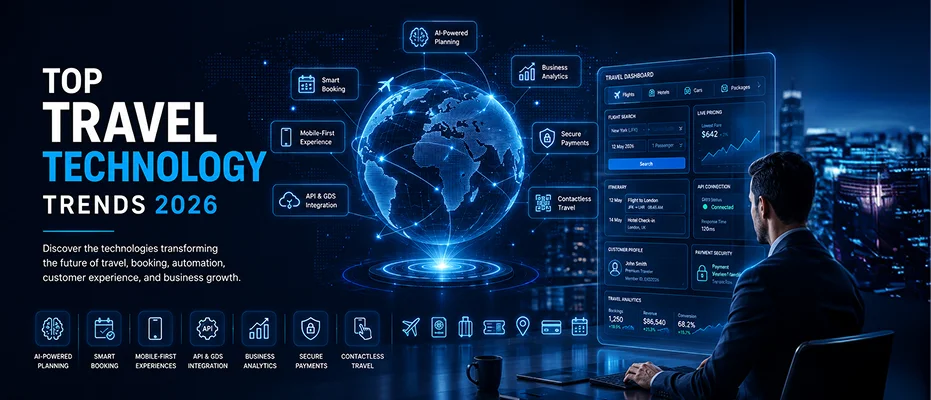
Top Travel Technology Trends in 2026
The travel technology industry continues to move toward structured and reliable systems that support both business operations and customer expectations. In 2026 companies are refining how they use travel technology tools to improve service delivery as well as reduce friction and strengthen decision making. A modern travel tech platform is no longer limited to booking functions. It now supports end to end travel management with clear data flow and consistent user experience.
At Expandorix, this shift is approached with a focus on practical implementation while ensuring that businesses adopt solutions that are both effective and sustainable within the evolving travel technology industry.
AI-Powered Travel Planning
AI is revolutionizing travel tech in many ways, with a major focus on enhancing travel decision making. Advanced travel technology tools analyze historical booking data, seasonal demand and pricing trends to come up with accurate recommendations.
These systems enable travelers to plan effectively without having to head to four or five different sources to do so. AI fortifies the features of a travel tech system for businesses, helping with fare estimates, route planning, and automated customer support.
This speeds up the responses and makes it easier to book accurately. With the advances of AI, it is still considered one of the most dependable travel technology solutions for dealing with vast amounts of data and producing uniform results.
Smart Online Booking Platforms
A well designed travel tech platform simplifies the booking process by combining multiple services into a single interface. Within the travel tech industry these platforms allow users to search flights as well as hotels and additional services without moving between systems.
This structured approach reduces confusion and improves transaction speed. Modern travel technology tools used in booking platforms include real time inventory updates, dynamic pricing and flexible booking features.
These improvements ensure that customers receive accurate information while businesses reduce operational errors. The continued development of booking systems reflects the growing importance of efficiency within the travel technology industry.
Mobile-First Travel Experiences
The ability to access something through a mobile device is expected in every facet of travel technology. Mobile devices are used by travelers to receive reservations updates, documents, and other information. This has resulted in the creation of travel technology tools that are mobile-first.
The mobile-focused travel tech platform prioritizes speed, clarity, and ease of navigation. Businesses that optimise their website for a mobile experience improve customer retention and engagement.
From a user perspective, mobile first means the services provided in the travel technology industry would always be available throughout the travel journey.
API and GDS Integration
Integration systems are essential within the travel tech industry. APIs and Global Distribution Systems allow a travel tech platform to connect with airlines, hotels and other service providers in real time. This ensures that availability, pricing and booking data remain accurate.
Travel tech tools that support integration reduce manual processes and improve operational efficiency. Businesses can expand their offerings without rebuilding their systems which makes integration a key factor in long term growth. In 2026, seamless connectivity is a standard expectation across the travel technology industry.
Hyper-Personalized Customer Experiences
Personalization is now a key aspect of the travel tech revolution. Travel technology tools are now analyzing the behaviors, booking history and preferences of users to offer customized experiences. This enables a travel tech website to display options without overwhelming the user.
This results in improved conversion rates and improved customer relationships for businesses. The suggestions made to travelers are tailored to their specific needs, whether for business or leisure travel. It's a high degree of personalization, and that's what's becoming more critical in the travel tech sector.
Contactless Travel Solutions
Contactless systems are now widely adopted across the travel technology industry. Travel tech tools such as digital check ins, biometric verification and mobile boarding passes reduce the need for physical interaction. These systems improve efficiency and shorten processing times.
A travel tech platform that supports contactless features helps businesses manage high volumes of travelers with greater consistency. For customers the experience becomes more predictable and convenient. Contactless travel solutions continue to shape how services are delivered within the travel industry.
Business Intelligence and Data Analytics
Data analysis is now an integral part of the travel technology business. Business intelligence tools for travel technology enable businesses to monitor performance, gain insights into customer behavior, and make informed decisions to optimize strategies. This results in better decision making and service.
A travel tech with a robust analytics feature enables companies to track trends, predict demand, and optimize pricing strategies. It is these insights that are crucial to staying competitive among travel technology players. It's no longer a luxury to be able to interpret data accurately.
Cybersecurity and Secure Payments
Security remains a critical concern within the travel tech industry. Travel technology systems must protect sensitive information including personal data and payment details. A secure travel platform builds trust and supports long-term customer relationships.
Modern systems use encryption, fraud detection and secure payment gateways to safeguard transactions. Businesses that invest in strong security measures reduce risk and maintain compliance with regulations. Cybersecurity continues to play a central role in the stability of the travel technology industry.
Benefits of Adopting Modern Travel Technology
The adoption of travel technology systems offers measurable benefits across the travel tech industry. Businesses gain improved efficiency, reduced costs and better control over operations. A reliable travel tech portal ensures that processes remain consistent and easy to manage.
Customers benefit from faster service, accurate information and personalized experiences. These advantages contribute to higher satisfaction and repeat business. The practical value of modern systems continues to drive adoption within the travel tech industry.
The Future of Travel Technology
The future of the travel industry backed by technology will focus on refinement rather than disruption. Travel technology tools will continue to improve in accuracy, speed and usability. A travel tech platform will become more integrated while supporting multiple services within a single environment.
Emerging developments such as predictive analytics and voice based interaction will further enhance how systems operate. Businesses that invest in these advancements will remain competitive within the travel technology industry. The emphasis will remain on creating reliable and adaptable solutions.
Conclusion
The travel tech industry in 2026 reflects a clear shift toward structured, dependable systems that support both businesses and travelers. Travel technology systems now play a central role in improving efficiency, accuracy and customer experience. A well developed travel tech portal connects these elements into a unified system that delivers consistent results.
Expandorix supports businesses within the travel technology industry by focusing on practical solutions that align with current demands. By adopting the right travel technology tools and investing in a strong travel tech platform companies can build a stable foundation for long term growth while meeting the expectations of modern travelers.